buying guides
6, 8, 10 or 12-Inch Benchtop Jointer?
Choose jointer width from the rough face you need to prepare, not the width of the finished tabletop or the biggest machine your budget can reach. Six-, eight-, ten- and twelve-inch classes each make sense for different stock plans. Extra width is useful when it removes a recurring constraint, but it cannot substitute for adequate support and suitable workpiece handling.
As an Amazon Associate I earn from qualifying purchases. “Check Amazon” links are affiliate links.
A relevant product to inspect
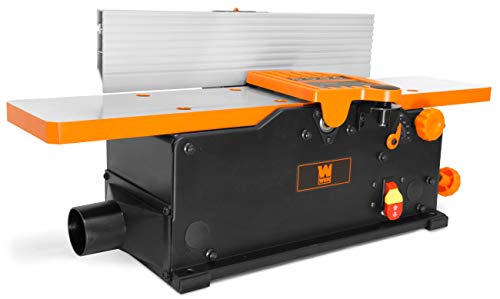
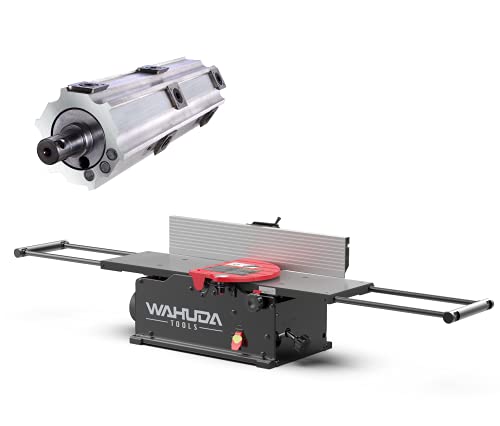
Check exact model, included equipment and current seller details.
Check AmazonMeasure rough stock rather than finished parts
Write the widest part you routinely present flat to the cutter, including the stock allowance before final sizing. Nominal lumber descriptions and finished drawings do not always give that working measurement. A board that looks close to a width limit should be measured, not squeezed into a category by rounding down.
Separate frequent work from one-off projects. A purchase for a recurring production need is easier to justify than a larger machine bought for a hypothetical future board that you may never use.
Understand why a wide project may use a narrow jointer
A tabletop assembled from individually prepared strips does not require a cutter as wide as the completed glue-up. The relevant face width is each board at the preparation stage. Edge jointing is also a distinct operation with its own orientation and support requirements.
This does not mean you should redesign every project to fit a small machine. It means the buying decision should follow the actual build sequence. Keep the aesthetic and material reasons for preserving a broad board separate from the needs of a panel assembled from narrower stock.
When six or eight inches is enough
A six-inch class can be a sensible starting point for consistently narrow components. An eight-inch class deserves attention when ordinary rough boards exceed that limit. Compare concrete examples in each class rather than assuming all machines at the same width have equivalent tables or cutters.
If you already own a narrow machine, count how often width genuinely blocks a project. An upgrade should fix a documented inconvenience. Changing from six to eight inches will not automatically resolve an unrelated fence adjustment or long-board layout problem.
Check the complete product offer
Affiliate link. Confirm the version, specifications and included accessories before purchase.
Check AmazonWhen ten or twelve inches earns its place
Broader classes make the most sense when you repeatedly prepare a broad reference face in one piece and the stock can be controlled within the specific manual’s requirements. Those two conditions matter together. Width fit alone does not establish a suitable operation.
Avoid paying for the top of a product range simply to avoid making a decision. First compare the added machine cost and support demands with professional milling for exceptional pieces. A few outside jobs can be a rational choice when ordinary work is much narrower.
Keep reference length and power separate
Cutter width, fixed bed length and extended support reach are different dimensions. A wide benchtop machine does not become a long-bed floor jointer because its cutter accepts a broad board. Likewise, matching amperage ratings do not promise identical cutting behavior at different widths.
The manufacturer’s maximum removal specification is not a recommendation to take that cut under every condition. Read the operating limits and assess your material, rather than using width and motor labels to invent a universal productivity estimate.
Choose a complete capacity plan
Draw the stock path through jointer, planer and final sizing equipment. Find the narrowest relevant capacity or most awkward handling step in that sequence. There is little benefit in purchasing one wide machine if a later operation remains unresolved for the same board.
Price only the widths that survive that process check. Include mounting, extraction and the space needed to handle the stock. Six or eight inches can be adequate when ordinary faces fit; ten or twelve inches needs a recurring broad-board job to justify the extra capacity. A ranking badge cannot supply that job, and occasional outside milling belongs in the comparison when it covers the exceptional pieces.
Questions, answered
Can I joint a twelve-inch tabletop on a six-inch machine?
A completed panel and its component boards are different workpieces. Prepare suitable individual boards before assembly where that matches the project; do not exceed the machine’s cutter or guard limits.
Does a twelve-inch jointer handle longer boards?
Not automatically. Cutter width and reference/support length must be evaluated separately.
How much spare width should I buy?
There is no universal allowance. Base it on measured rough stock and credible future projects, then compare the cost of occasional outside milling.