As an Amazon Associate I earn from qualifying purchases. “Check Amazon” links are affiliate links.
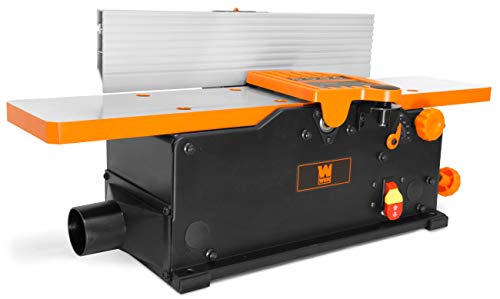
Machine to compareSix-inch cutting width with a 30-inch table and individual HSS cutters. Compare its BP510H replacement system with the JT3062’s full-width knives.
- Cutting width
- 6 in
- Base table length
- 30 in
Confirm the exact model, seller, included equipment and current manual before purchase.
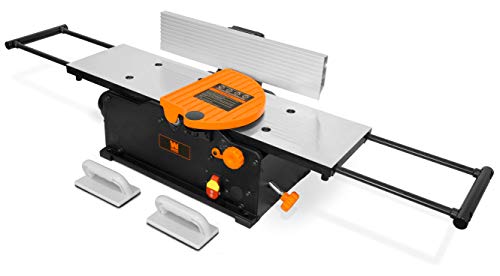
Check AmazonMachine to compareWEN’s eight-inch model has a 33-inch base table and 51-inch extended support span. Its sixteen HSS cutters use a different service routine from full-width knives.
- Cutting width
- 8 in
- Base table length
- 33 in
Confirm the exact model, seller, included equipment and current manual before purchase.
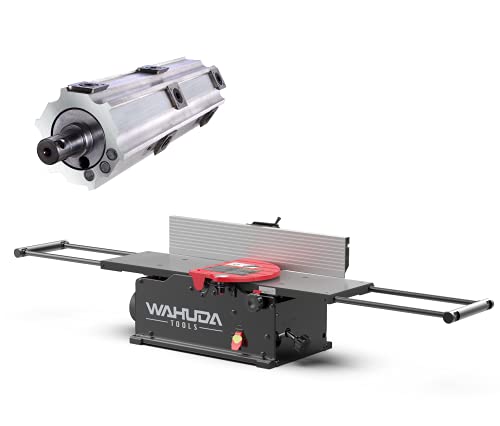
Check AmazonMachine to compareAn eight-inch Wahuda with a 34-inch table and four-sided carbide inserts. Compare its cutter replacement system with the HSS-equipped WEN JT833H.
- Cutting width
- 8 in
- Base table length
- 34 in
Confirm the exact model, seller, included equipment and current manual before purchase.
Check AmazonMachine to compareThe eight-inch 40180HI uses cast-iron tables, a 34-to-54-inch support span and a 24-inch fence. Compare its 65.5-pound package with the coated-aluminum 40180HB rather than treating both as one eight-inch configuration.
- Cutting width
- 8 in
- Base table length
- 34 in
Confirm the exact model, seller, included equipment and current manual before purchase.
Check Amazon Benchtop jointer questions, answered
What is a benchtop jointer for?
It prepares a flat reference face and an edge square to that face on suitable stock. It does not by itself make opposite faces parallel or produce uniform thickness; that is a separate thickness-planing task.
Read the detailed guideAre benchtop jointers worth it?
They can be worthwhile for a small shop processing stock within the machine’s documented limits. Compare your actual boards, available support, setup time and total cost with a floor-standing jointer or buying already-surfaced lumber.
Read the detailed guideWhat is a good benchtop jointer?
A useful shortlist starts with enough cutting width, suitable table support and clear model documentation. Compare WEN, Cutech, Wahuda and RIKON around those requirements rather than treating one machine as the best choice for every shop.
Read the detailed guideWhat is the best benchtop jointer in 2026?
There is no single demonstrated winner in our research. Our current buying guide compares documented configurations for different jobs and budgets, with exact-model checks and no claim of hands-on comparative testing.
Read the detailed guideWhat is the best benchtop jointer for a home shop?
Choose around the boards you use most, stable mounting and the space needed on both sides of the cutter. A compact machine still needs a clear material path, dust collection and support appropriate to its manual.
Read the detailed guideIs it better to have a jointer or planer?
The tools solve different problems. A jointer establishes a reference face and square edge; a thickness planer uses a reference face to make the opposite face parallel. Your existing tools and the condition of purchased lumber determine which gap matters first.
Read the detailed guideWhat is the best jointer for a beginner?
Look for clear instructions, a complete working guard, reliable adjustment, appropriate stock limits and stable installation. Begin with training and the exact manual. A smaller cutterhead does not automatically make a machine easier or safer to use.
Read the detailed guideWhy use a jointer instead of a table saw?
A jointer can flatten a reference face and straighten an edge. A normal table-saw rip cut follows the reference presented to the fence and does not flatten a broad face. Specialized jigs have separate setup and safety requirements.
Read the detailed guideWhy are jointers so expensive?
A jointer combines aligned tables, a fence, cutterhead, drive system, guards and a rigid structure. Compare the complete setup and replacement parts, not just the machine price. Additional width or a premium cutterhead is valuable only if it helps your actual work.
Read the detailed guideWhat is the best jointer under $1000?
Use that as a complete-system budget and check current offers. A machine below the limit may still need a stand, mounting hardware, dust collection and push blocks. Our calculator uses your own quotes instead of promising that a particular setup stays below a changing price cap.
Read the detailed guideWhich should I buy first, a jointer or a planer?
Start with the missing operation in your workflow. Already-flat lumber that needs thicknessing suggests a different need from twisted rough stock needing a reference face. Include the option of a milling service rather than assuming every shop needs both immediately.
Read the detailed guideWhat is the best benchtop jointer planer combo?
Check the jointer and planer modes separately, including capacities, changeover, chip collection and support. A bundle of separate machines is not a combination machine. Select a documented exact model that fits both parts of your workflow.
Read the detailed guideHow can I join two boards lengthwise?
Preparing mating edges and actually joining boards are different tasks. A jointer can prepare suitable straight, square edges for an edge-to-edge panel; glue, clamping and joint design complete the assembly. End-to-end structural joints require a different design and are not created simply by running boards over a jointer.
Read the detailed guideWhat is the minimum length of board you can run through the jointer?
Use the minimum length stated for your exact machine and operation. Manufacturers publish different limits, and some manuals distinguish surfacing from other operations. Never transfer another model’s number or assume a push block makes undersized stock acceptable.
Read the detailed guideHow long does a board have to be to go through a planer?
Read the thickness-planer mode’s own minimum stock length. Its feed rollers and cutter arrangement differ from a jointer, including on a combination machine. A jointer’s stock limits cannot establish what a planer can accept.
Read the detailed guideCan you run plywood through a jointer?
Do not assume approval. Plywood edges combine changing grain directions and adhesive layers, and the machine may restrict processing to natural wood. Follow the exact manual and choose an appropriate alternative when the material is excluded.
Read the detailed guideHow this guide is researched
John Morris publishes this independent buying resource using manufacturer product pages, operating manuals and clearly identified product listings. We distinguish documented limits from buying judgments and do not claim hands-on testing, measured finish quality or a universal winner.
Start with the WEN JT630H manufacturer page, Wahuda 8-inch specifications, and each model guide’s linked manual. Read our research methodology and affiliate disclosure.