troubleshooting
Why Does My Jointer Leave Ridges or Lines?
A line that repeats along the same track on a board deserves a different diagnosis from scattered tearout. Begin by determining whether it is raised, recessed or merely a change in appearance. Preserve the sample and inspect the machine only after shutdown and disconnection.
As an Amazon Associate I earn from qualifying purchases. “Check Amazon” links are affiliate links.
A relevant product to inspect
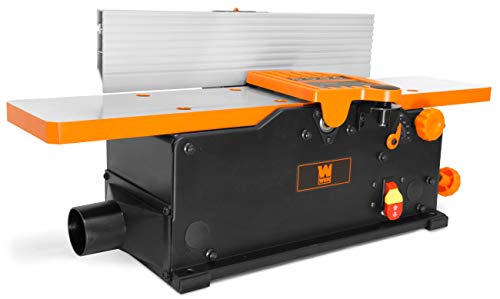
Check exact model, included equipment and current seller details.
Check AmazonMap the mark on the workpiece
Use consistent lighting and a suitable straightedge or other measuring tool to assess the surface away from the machine. Mark the reference edge, feed orientation and location of the line. Record whether the line follows the same relative track on other existing samples. Do not create more samples by continuing to run a machine with suspected loose or damaged parts. The goal is a precise description that helps select the correct inspection, not a growing pile of marked project stock.
Distinguish geometry from appearance
A color change can resemble a ridge under certain lighting. Check whether the surface actually stands proud or contains a groove. A repetitive physical feature suggests a different issue from a finishing stain or a grain reflection. This distinction matters because unnecessary cutter service introduces work without addressing the original concern. If the board is geometrically acceptable, consider the later surface-preparation process before deciding that every visible line requires a machine adjustment.
Review recent changes
Did the symptom begin after insert rotation, knife replacement, cleaning, transport or an impact with questionable stock? Record that history. A fault that appears immediately after maintenance should prompt a careful review of the exact service procedure and parts used. It does not justify assuming the maintenance was necessarily wrong, but it provides a useful starting point. Save packaging and part numbers so compatibility can be checked without relying on memory or visual resemblance.
Check the complete product offer
Affiliate link. Confirm the version, specifications and included accessories before purchase.
Check AmazonFollow the cutter inspection procedure
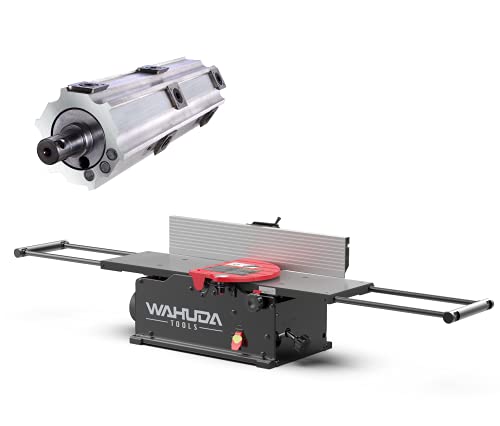
The Grizzly troubleshooting section connects longitudinal lines with cutter damage or installation issues. Use your own model's procedure to investigate those possibilities with the machine disconnected. Do not feel for sharpness with a bare finger. An insert that looks similar may differ in radius, dimensions, thickness or screw interface. If compatibility or seating is uncertain, stop and resolve it with the manufacturer before running the cutterhead. A generic description such as square carbide is not sufficient identification.
Do not adjust unrelated geometry first
Keep the diagnosis tied to the narrow repeated track. A fence-angle change or table adjustment may leave that mark untouched while introducing a second error. Record the component inspected, the finding and the approved correction so another operator or service technician can follow the work. When the line first appeared after indexing cutters, compare that history with the insert-service checks before altering unrelated geometry.
Verify without sacrificing the project
After proper reassembly, guarding and required checks, assess suitable material through the approved operating procedure. Compare the resulting surface with the saved sample. If the same line remains, use the recorded location and service history to seek technical support. Do not assume further tightening is the next step; torque and fastener requirements are model-specific. Once the machine produces an acceptable result, decide separately how to finish or repurpose the previously marked parts.
Questions, answered
Does a ridge always mean a chipped insert?
No. It is one possibility, along with installation or other conditions. Confirm the physical pattern and follow the model-specific inspection procedure.
Can I rotate just the affected insert?
Only as permitted by the exact cutterhead instructions, using compatible parts and specified procedures. Do not infer the service method from another model.
Are all square carbide inserts interchangeable?
No. Dimensions, edge geometry, thickness and mounting details can differ. Match the manufacturer's exact part specification.