accessories
Which Push Blocks Should You Use on a Benchtop Jointer?
A useful jointer push block helps you control permitted stock while keeping your hands away from the cutterhead. Choose it for the operation described in your jointer manual and the block manufacturer’s instructions. The most elaborate accessory is not automatically the right one, and no push block makes undersized stock or an unsupported operation acceptable.
As an Amazon Associate I earn from qualifying purchases. “Check Amazon” links are affiliate links.
A relevant product to inspect
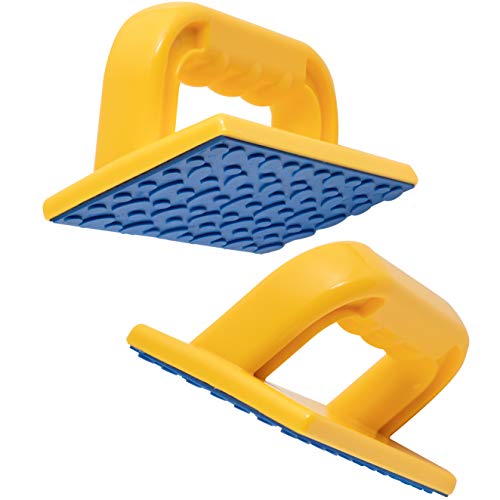
Check exact model, included equipment and current seller details.
Check AmazonShould you start with the supplied blocks?
Inspect what comes with the machine before adding accessories to the basket. WEN lists two push blocks with its JT630H benchtop jointer, for example. Supplied equipment can be a sensible starting point when it is undamaged and used as instructed. Check the handles and contact surfaces before each session, rather than assuming included means maintenance-free.
Consider what problem you are trying to solve: worn grip, an uncomfortable handle or a need for a manufacturer-documented technique. Buying a replacement for a specific problem is more useful than accumulating several nearly identical blocks that you have not learned to use.
What features are worth comparing?
Look at the contact area, handle position, replaceable wear surfaces and instructions for the intended operation. A pad needs usable contact on the board being worked; a large footprint can become awkward on a narrow surface. A handle should permit the intended control without encouraging you to lean over the machine.
Microjig markets its GRR-RIP BLOCK for use with jointers and other woodworking equipment. That product-level application statement is a starting point, not permission to use every accessory technique on every jointer. Read both sets of instructions and resolve conflicts before operation.
Does a heel or hook replace surface grip?
Treat hook design and surface grip as different features to understand, rather than reasons to relax workpiece control. Review when the accessory manufacturer intends the hook to engage and whether that arrangement suits your stock. Do not add an improvised protrusion that can strike the machine or interfere with its guard.
A buying comparison should explain the operating context of each feature. A hook that is useful for one approved task may not be relevant to another. Avoid choosing solely from a dramatic demonstration video that omits the machine setup, stock limits or accessory instructions.
Check the complete product offer
Affiliate link. Confirm the version, specifications and included accessories before purchase.
Check AmazonHow do guards and stock limits affect the choice?
The cutterhead guard remains part of the machine’s protective system. A push block does not replace it. Confirm that the selected accessory can be used with the guard functioning as designed and that your board satisfies the model’s minimum dimensions. If either condition cannot be met, change the operation instead of adapting the guard.
Short offcuts are a particularly poor reason to buy a new block. The accessory cannot extend the jointer’s documented minimum stock length. Plan project parts so jointing happens while the stock is still within the machine’s permitted dimensions, or choose another appropriate preparation method.
When should you replace a push block?
Follow its maker’s cleaning and replacement guidance. Inspect for cracked handles, damaged soles, loose components and contamination that affects control. Do not begin a cut hoping that additional hand pressure will compensate for a deteriorated contact surface. Keep usable blocks close enough to reach before starting the operation.
Compare the price of the complete pair or system, replacement-pad availability and instructions for your operation. With the jointer disconnected, rehearse the intended movement before using a new setup. If you cannot maintain control within the manufacturer's procedure, obtain instruction or choose another method; do not experiment at the cutterhead. The jointing workflow places that preparation alongside stock inspection and the machine's required guarding.
Questions, answered
Do I need expensive push blocks?
Price is not the deciding factor. Choose suitable, undamaged blocks supported by clear instructions for your machine and operation.
Can push blocks make very short boards safe?
No. They do not override the jointer’s minimum workpiece dimensions or other operating restrictions.
Can I remove the guard when using a push block?
Do not treat an accessory as a replacement for the guard. Keep the machine’s protection functioning and follow its manual.

