buying guides
Buying a Used Benchtop Jointer: What to Check
A used benchtop jointer is a worthwhile candidate only when its condition, required parts and total cost can be understood before purchase. A familiar badge and a running motor are not a complete inspection. Treat an unknown fault as a real uncertainty instead of assuming it will disappear with a quick adjustment after the seller has been paid.
As an Amazon Associate I earn from qualifying purchases. “Check Amazon” links are affiliate links.
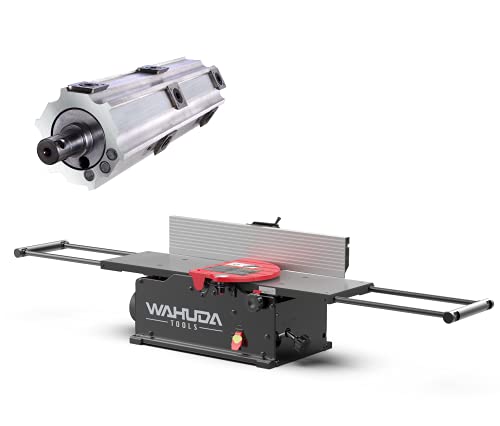
A relevant product to inspect
Check exact model, included equipment and current seller details.
Check AmazonGet the identity before arranging collection
Ask for a readable model plate and photographs of the whole machine, fence, guard and supplied accessories. Obtain the applicable manual before viewing. It provides a basis for checking completeness and prevents confusing a related model with the one actually offered.
If the seller cannot establish the model or has altered the machine, be cautious about assigning value to it as ready-to-use equipment. You need a clear service path for the specific unit, not a general belief that parts for the brand are common.
Check completeness with the machine disconnected
Compare the visible components with the manual. Pay particular attention to guarding, fence attachments, locking hardware, collection pieces and the correct operating controls. Do not reach around exposed cutters or improvise an inspection that requires operating without the intended protections.
A missing small-looking component can matter. Obtain its exact replacement reference and availability before accepting a seller’s assurance that something similar from the hardware store will work. A parts machine and a usable jointer should be priced as different purchases.
Assess tables and fence without guessing the repair
Look for obvious damage, corrosion and signs of forced or makeshift adjustment. Use suitable checking equipment and the manual’s inspection procedure with power disconnected. Distinguish a dirty surface from a damaged reference or broken support; they do not imply the same repair burden.
Do not accept the phrase needs tuning as a diagnosis. Ask what adjustment was attempted and what result remains wrong. If you cannot determine whether the problem is an adjustment, damaged component or missing part, keep that uncertainty in the purchase decision.
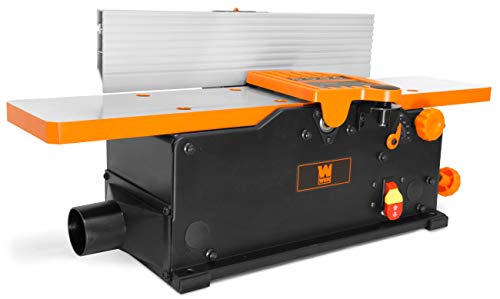
Check the complete product offer
Affiliate link. Confirm the version, specifications and included accessories before purchase.
Check AmazonEvaluate cutters and moving components appropriately
Cutting edges are sharp even on an unplugged machine. Inspection and any rotation or access should follow the specific manual. Look for missing, damaged or mismatched cutting elements without treating a casual visual check as proof that the head is serviceable.
If a demonstration is appropriate, it should be carried out by a competent operator with all required equipment and suitable stock. Do not energize damaged wiring or a machine with uncertain guards simply to hear the motor. Electrical or mechanical doubts warrant qualified assessment.
Price the repairs before negotiating
Add confirmed replacement parts, transport, service and the normal installation costs to the asking price. Then compare that total with a suitable new or known-good alternative. A cheap machine can lose its advantage quickly if a guard, fence component or motor repair remains unresolved.
Keep a contingency for uncertainty, but do not invent a precise repair estimate without a diagnosis. If the total makes sense only when every unknown turns out favorably, you are buying a repair gamble rather than a reliably inexpensive working tool.
Use clear reasons to walk away
Walk away when identity is unclear, required protection has been bypassed, critical parts cannot be found or the seller will not allow a reasonable safe inspection. Also decline if the machine simply does not fit your stock or working space. A bargain in the wrong size is still the wrong tool.
If you proceed, retain the model information and record what must be completed before use. The purchase is not the commissioning process. Resolve faults and verify the setup under the applicable instructions before asking it to prepare valuable project material.
Questions, answered
Is surface rust a reason to reject a used jointer?
Not automatically, but determine whether the reference surfaces or components are materially damaged. Do not assume all visible corrosion is merely cosmetic.
Should I buy one that needs only adjustment?
Only when you can reasonably establish the diagnosis and repair path. The seller’s description alone does not prove that adjustment is the whole issue.
How much less should used cost?
There is no universal percentage. Compare the asking price plus confirmed repairs, transport and installation with an appropriate known-good alternative.