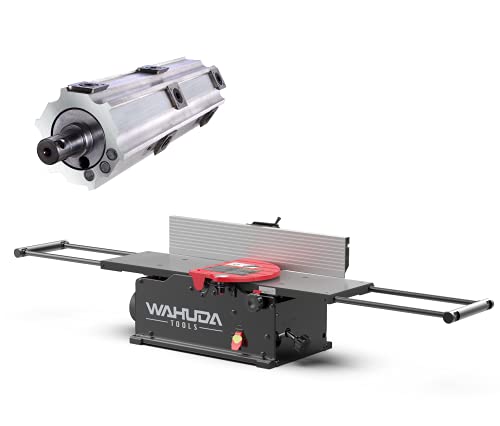
comparisons
Jointer vs Table Saw: Why Use Both?
A jointer establishes reference surfaces; a table saw sizes material from suitable references. In a typical rough-lumber sequence, the jointer prepares a face and related edge before the saw rips the opposite edge to width. A purpose-designed edge-jointing fixture can cover a narrower edge task, but only when the stock, saw, guarding and complete setup support it.
As an Amazon Associate I earn from qualifying purchases. “Check Amazon” links are affiliate links.
A relevant product to inspect
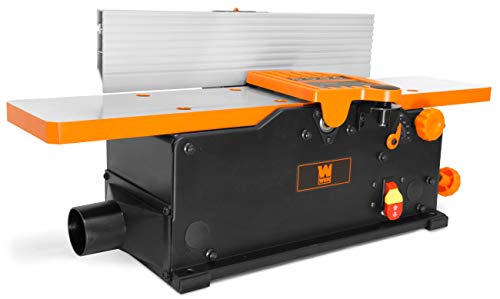
Check exact model, included equipment and current seller details.
Check AmazonIdentify the reference you are missing
A board can have an irregular edge, a distorted face or both. Those are different problems. Before choosing a tool, identify which surface must become a usable reference for the next operation. A straight-looking edge does not automatically make a twisted face flat.
This distinction matters when comparing purchases. If an edge is the only unresolved issue, a suitable alternative arrangement may be worth evaluating. If face preparation is the recurring problem, simply adding a ripping blade does not address the same operation.
What the jointer contributes
The jointer’s table and cutter arrangement is intended for establishing a flat reference and preparing an edge related to it, within the exact model’s limitations. That creates a basis for later sizing. It does not replace every saw cut or automatically make the opposite face parallel.
Think of the tool in the preparation sequence rather than asking which machine is generally more versatile. A specialized tool can be worthwhile when its particular job repeatedly holds up a project, even if another machine performs more kinds of cuts overall.
What the table saw contributes
A table saw can rip the remaining edge to width only after the stock has the reference geometry required by the documented setup. For an ordinary fence-guided rip, that means the edge against the fence must be suitable to register the cut and the face on the table must remain controlled. Sizing from references is different from creating every missing reference on distorted stock.
Do not place an irregular edge against a fence and hope the cut will correct it, and do not freehand a rip to avoid that problem. Resolve the reference and workholding method first, then follow the saw manual for the guard, riving knife or splitter, fence, push devices and stock limits that apply.
Check the complete product offer
Affiliate link. Confirm the version, specifications and included accessories before purchase.
Check AmazonWhere an edge-jointing jig fits
A purpose-designed edge-jointing fixture may carry an irregular edge while the fixture—not that edge—registers against the fence. That is a bounded edge-straightening method. The board still needs a face and clamping arrangement suitable for the complete fixture, and the result does not establish that a cupped or twisted broad face is flat.
Use a documented fixture that fits the saw, stock and required guarding; verify that its clamps and body clear the blade path throughout the cut. This guide does not recommend removing protective equipment, freehand feeding or improvising a jig from a short paragraph. If the complete method is unavailable, treat the edge operation as unresolved rather than as a reason to skip a jointer.
Compare the work you repeat
If you repeatedly prepare rough lumber, assess the sequence in order: join or otherwise establish one face, prepare one related edge, plane the opposite face parallel, then rip the remaining edge to final width. Name the exact machine, fixture or outside service for each stage. The first missing or unreliable operation identifies the real investment need.
If you buy surfaced stock with a usable face and only occasionally correct an edge, a documented saw fixture or outside service may cover the gap. If face distortion is routine, an edge-only workaround leaves the first stage unsolved. Match the purchase to that distinction rather than to the table saw’s broader list of possible cuts.
Choose complementary capacity
A shop that uses both tools should choose capacities and layout that work together. Ensure the boards you plan to prepare can move through the entire process within each machine’s instructions. A wider jointer does not resolve every saw or planer limitation later in the sequence.
Price the unresolved operation. For an edge-jointing fixture, include suitable workholding, setup time and checking; for a jointer, include mounting and collection. If the unresolved task is flattening a broad face, an edge-only fixture does not cover that cost or function. This keeps the comparison tied to the reference surface you need, rather than the number of operations each machine advertises.
Questions, answered
Why use a jointer instead of a table saw?
Use a jointer when the task is establishing suitable reference surfaces within its intended operation. Saw-based edge methods address a narrower task and do not automatically replace face preparation.
Can a table saw joint an edge?
An appropriate documented fixture and setup may address an edge-straightening task. Its suitability depends on the saw, stock and complete method; do not improvise around guards.
Do I need both machines?
Not necessarily. Map your actual stock-preparation and cutting tasks to the equipment or services you have. Repeated missing operations, rather than a universal tool list, should guide the next purchase.