guides
What Does a Benchtop Jointer Do?
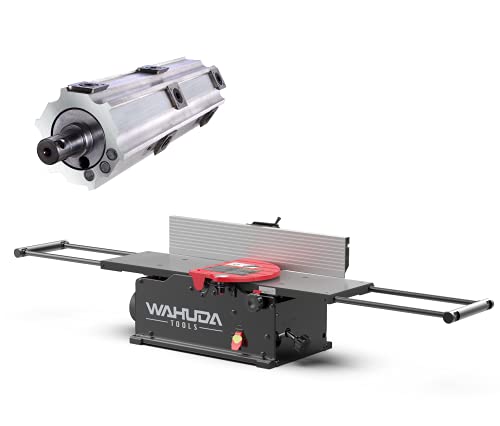
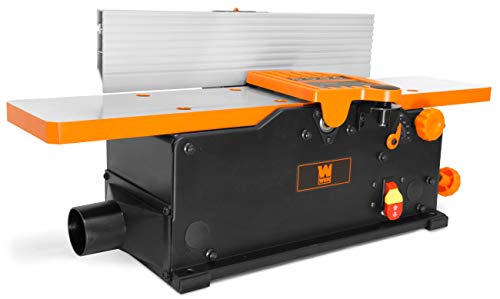
A benchtop jointer prepares a flat reference face and a straight reference edge on suitable lumber. Those references help other machines produce accurate parts. It is especially useful when a board looks reasonably straight but rocks on the bench or refuses to make a consistent glue joint.
As an Amazon Associate I earn from qualifying purchases. “Check Amazon” links are affiliate links.
A relevant product to inspect
Check exact model, included equipment and current seller details.
Check AmazonThe two jobs that matter
Think about a cabinet side before thinking about motor size. One broad surface needs to sit flat, and one long edge needs to meet it at the intended angle. Face jointing addresses the first requirement; edge jointing addresses the second. They are different operations, even though they use the same cutterhead. A shiny surface is not the test of success. The useful result is a dependable geometric reference that you can identify and preserve through later machining.
Why the tables are important
The cutterhead removes material between an incoming support surface and an outgoing support surface. That arrangement explains why a compact machine still needs accurate table alignment. It also explains why simply pushing harder cannot solve every warped board. Your project is not improved by repeatedly removing wood without checking whether the reference is becoming flatter. Make inspection part of the workflow rather than an activity reserved for the finished glue-up, when corrections become more expensive.
What it does not finish for you
A flat first face does not guarantee that the opposite face is parallel. A straight first edge does not automatically establish final width. Plan the remaining operations before buying a jointer: commonly, a thickness planer creates the parallel second face and an appropriate saw setup establishes the opposite edge. These are complementary tasks. Counting every flat-looking surface as finished can leave parts that fit individually but do not align when you assemble several together.
Check the complete product offer
Affiliate link. Confirm the version, specifications and included accessories before purchase.
Check AmazonWhere a benchtop machine fits
Small furniture parts, box components and manageable shelf stock are sensible projects to investigate. Start with a cutting list showing actual rough dimensions, not just finished dimensions. Wide boards may exceed cutting capacity before any flattening begins. Long pieces may require a support arrangement that defeats the convenience of a compact bench machine. A project-based list makes the tradeoff visible: portability is useful only if the stock you routinely buy can be handled within the machine's documented limits.
What to check before using one
Use the exact operator manual to establish approved materials, workpiece limits, guarding, push-block technique and setup. The linked Wahuda manual distinguishes surfacing from edge jointing, which is why an internet instruction for one operation should not silently become an instruction for the other. Do not remove the guard to gain width or improvise a pass on an undersized offcut. If the stock or operation falls outside the manufacturer's instructions, choose another preparation method or ask the manufacturer.
Decide whether the result is worth the space
Match the purchase to the problem you keep encountering. Crooked glue edges and unreliable face references are jointer jobs; sanding scratches, uniform thickness and trimming assembled panels belong to other processes. Write down three recurring preparation problems and compare them with the two reference-making operations above. Include extraction, storage and replacement cutters in the space and cost calculation. If your main need is uniform thickness, the face-versus-edge explanation shows where jointing ends and the next sizing operation begins.
Questions, answered
Does a jointer make boards the same thickness?
Not by itself. Establishing a reference face and producing a parallel opposite face are separate goals. A thickness planer commonly handles the second job, provided the stock and procedure meet its instructions.
Can a benchtop jointer prepare glue edges?
Yes, on suitable stock within its capacity, with a properly prepared reference face and correctly set fence. Check the resulting edge rather than assuming every pass produces a finished joint.
Does jointing replace sanding?
No. Jointing establishes geometry; sanding addresses surface preparation. A jointed board can still need subsequent machining and finishing work appropriate to the project.