guides
Which Grain Direction Should You Feed a Jointer?
Grain direction describes the orientation of wood fibers; feed direction describes the machine's required travel from infeed to outfeed. They are related decisions but are not interchangeable. Reorienting suitable stock between operations does not mean feeding backward through the jointer.
As an Amazon Associate I earn from qualifying purchases. “Check Amazon” links are affiliate links.
A relevant product to inspect
Check exact model, included equipment and current seller details.
Check AmazonStart with the machine direction
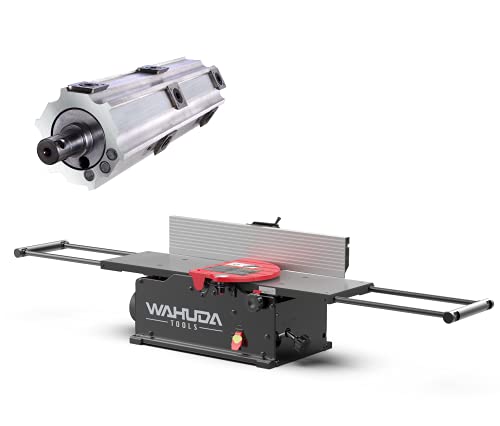
Identify the infeed and outfeed sides from the manual and machine labels before considering the grain. Keep the required direction fixed. Never interpret advice to reverse a board as permission to pull it backward over a running cutterhead. When a cut or workpiece presents a problem, stop and follow the manual's procedure rather than improvising a reverse pass. The Wahuda instructions specifically prohibit backing the work toward the infeed table.
Inspect more than the surface pattern
Decorative figure can make grain direction difficult to judge, especially around knots or changing fiber orientation. Look at the board as a whole before deciding whether it is suitable for the intended operation. A pencil arrow on an approved, inspected blank can help preserve the chosen orientation as parts move around the shop. Treat the arrow as a planning aid, not proof that every inch of the board has the same grain behavior.
Connect orientation to the defect
Tearout is missing material, not simply a dull appearance. Note whether damage follows a figured area, appears throughout the board or repeats in a narrow track. Those patterns lead to different questions. A grain-related problem should not automatically prompt a fence adjustment, and a persistent straight ridge should not automatically be blamed on grain. Describing the surface accurately helps you choose a relevant inspection instead of changing several unrelated settings at once.
Check the complete product offer
Affiliate link. Confirm the version, specifications and included accessories before purchase.
Check AmazonStay within the approved procedure
Use the manufacturer's operating guidance for stock orientation, cutting depth and handling. This guide does not assign a universal feed speed or recommend trying an unapproved direction until the surface improves. Difficult grain can be a reason to choose another preparation method, especially when little thickness allowance remains. The goal is to preserve a usable part, not prove that one cutterhead can process every board. Ask for model-specific guidance when the material is uncertain.
Keep a record for matching parts
For matching parts, keep the visible-face layout alongside the machining references. Attractive figure may determine which faces you want to show, but suitability and remaining dimensions determine whether that arrangement survives preparation. Note orientation for parts cut from the same board and inspect a suitable representative blank before processing the full set. If cleanup consumes too much thickness, revise the layout or stock choice before more matching pieces are affected. The tearout guide explains how to assess that loss of allowance.
Separate surface quality from accuracy
A smooth face may still be geometrically unsuitable, and a flat reference may need additional surface preparation. Check those outcomes independently. If you obtain the required reference but the visible finish needs improvement, decide whether another appropriate finishing process is more efficient than further jointing. That choice can conserve thickness and avoid repeatedly exposing difficult grain. Cutter type is one consideration, but it does not replace stock inspection, correct setup or a complete plan for the finished part.
Questions, answered
Does reversing grain mean feeding backward?
No. The machine's prescribed feed direction remains unchanged. Any permitted stock reorientation happens between operations, using the manual's procedure.
Can spiral inserts prevent all tearout?
No cutter description guarantees every grain pattern will produce a flawless surface. Material, setup and the approved cutting procedure still matter.
Should I joint through a knot to test the grain?
Do not use a trial cut to establish whether questionable stock is acceptable. Inspect it and apply the manual's restrictions before operation.